We’re transitioning our fuel card provider from Comdata to EFS/WEX. Read the important updates & features of the new provider below. If you have any questions, please reach out to your DM.
Changing Fuel Cards to EFS/WEX
There is a WEX CardControl app so drivers can find fuel locations and prices along your route
Weight and Pay with ease at Cat Scale locations
Drivers will receive their new fuel cards and EFS Money Code checks in the upcoming weeks
No change in the process at the pump except a different card
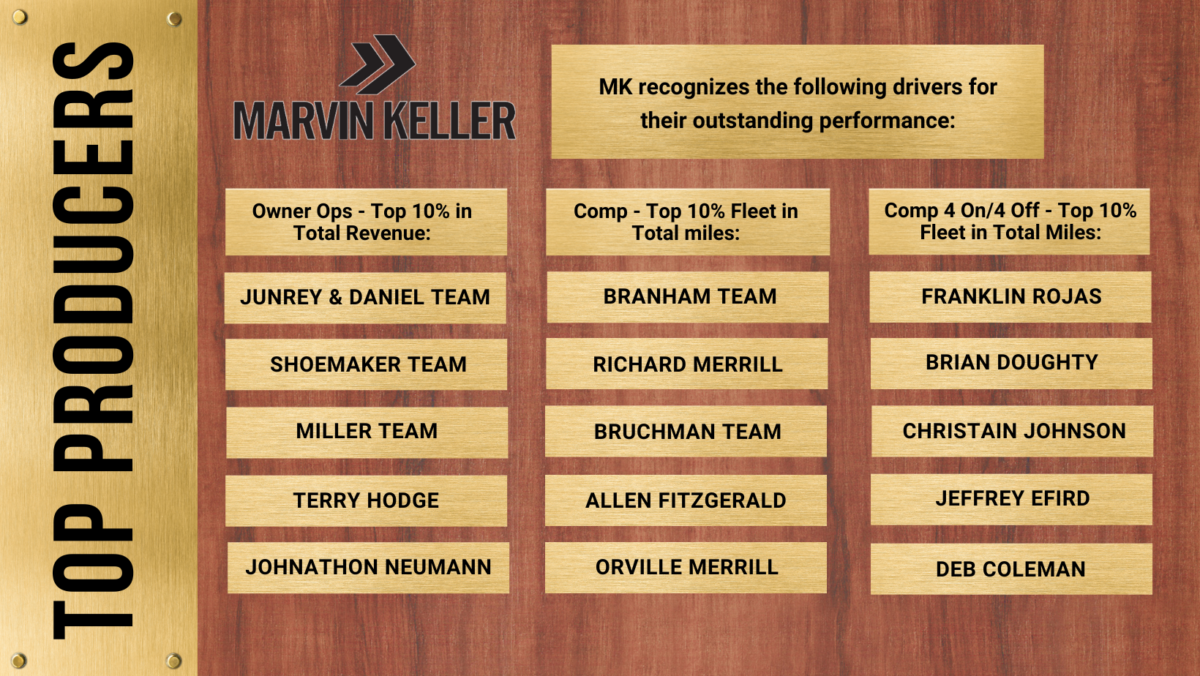
Each quarter, the Producer Badge is awarded to drivers who are in the Top 10% of the fleet in who exceed the quarterly productivity goals. This badge symbolizes the driver’s hard work and success within Marvin Keller.
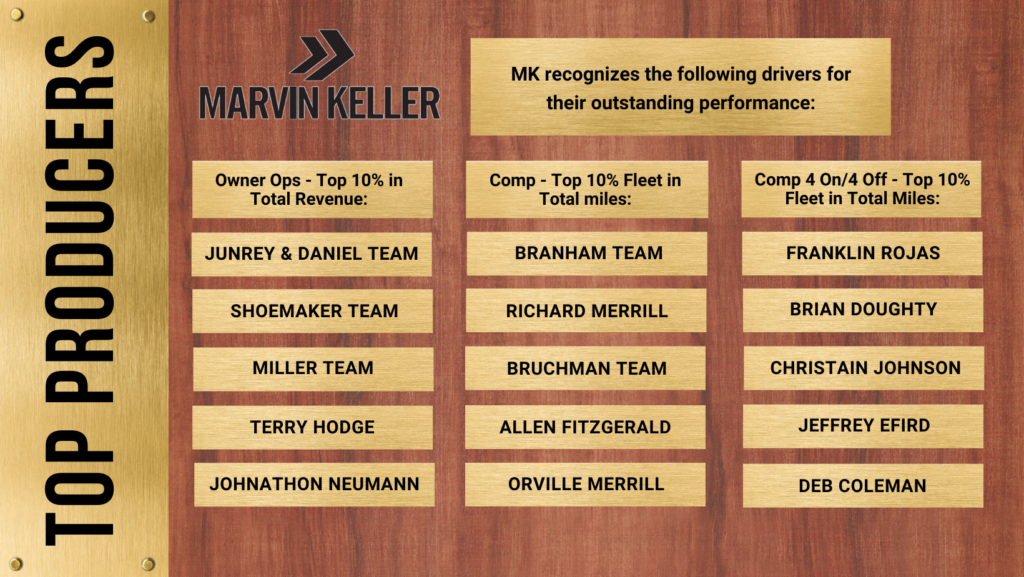
Congratulations to the following drivers who earned the Producer Badge for 2025 – Quarter 1!!
Owner Operators – Top 10% Total Revenue for the Quarter
Junrey Montejo & Daniel Nunez Team
Shoemaker Team
Miller Team
Terry Hodge
Johnathon Neumann
Company Drivers, OTR – Top 10% Fleet in Total Miles
Branham Team – 45,564
Richard Merrill – 39,934
Bruchman Team – 39,551
Allen Fitzgerald – 35,207
Orville Merrill – 33,915
Company Drivers, 4 On/4 Off – Top 10% Fleet in Total Miles
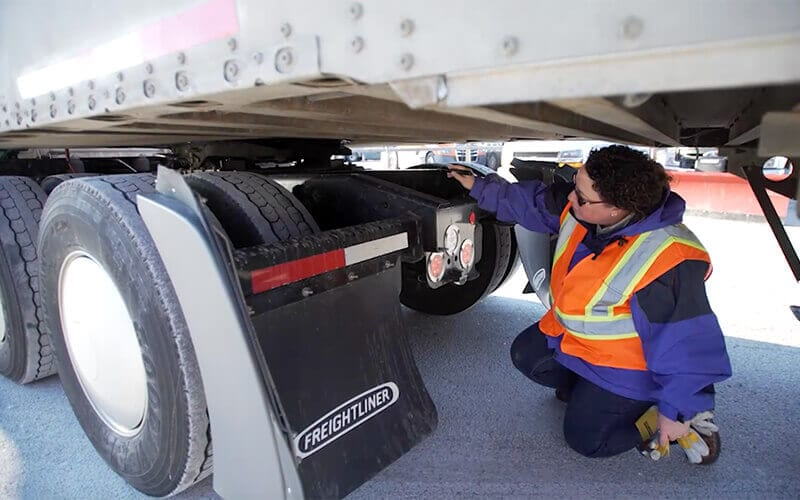
We know you’ve heard us discuss pre and post-trip inspections before, likely more than once. But hear us out. This isn’t just about checklists, rules, or company policy. It’s about what kind of driver you are when no one’s looking. That quick walk around and careful look under the hood says you take pride in your work and says you’re a pro. A solid pre and post-trip routine doesn’t just protect the equipment, it protects you.
Here’s what a few extra minutes buys you:
Healthier Equipment
The truck you inspect today is the one that’ll run better tomorrow. Spotting a small issue early, such as a worn belt, low tire pressure, or loose wiring, can be the difference between a quick fix or a full-blown repair miles from home. When you take care of your equipment, it returns the favor.
Fewer Over-the-Road Breakdowns
There’s never a good time to break down, but there is a better way to prevent it. Catching issues before you leave the lot means fewer surprises on the road, less downtime, less frustration, and more control.
DOT Compliance & Fewer Violations
Proper inspections help avoid CSA (Compliance, Safety, Accountability) points by catching violations before roadside inspectors do. It also helps prevent costly fines and keeps our reputation solid.
Your Safety
No load, no deadline, no shortcut is worth risking your safety. A complete inspection can reveal hazards before they become emergencies. It keeps you and the others on the road safe. That’s something no one should take lightly.
Bottom line?
Pre & post-trip inspections may be routine, but they speaks volumes. We don’t just talk about them because it’s policy. We talk about them because they’re one of the strongest habits of a safe, reliable, top-tier driver. And that’s what we strive for every day.
You matter to this company, and your safety matters even more. That’s why we’ll never stop reminding you to take those 10 minutes for yourself and everyone counting on you to make it home safely.
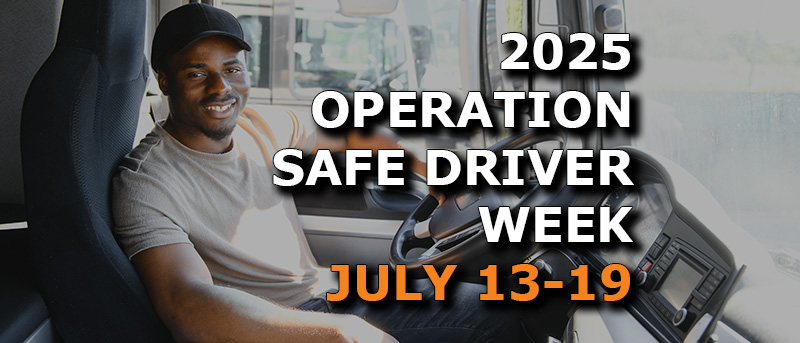
“The Commercial Vehicle Safety Alliance (CVSA) has announced July 13-19 as this year’s Operation Safe Driver Week, a safe-driving enforcement and outreach initiative aimed at improving driving behaviors through education, traffic-enforcement strategies, and driver interactions with law enforcement.
During Operation Safe Driver Week, law enforcement personnel in Canada, Mexico and the U.S. will be on the lookout for commercial motor vehicle drivers and passenger vehicle drivers engaging in unsafe driving behaviors, such as speeding, distracted driving, following too closely, drunk or drugged driving, etc. Drivers engaging in such behaviors will be pulled over by law enforcement personnel and issued a warning or citation.”
This is a quick reminder to complete the Reporting Physical Damage maintenance campaign by August 1st, 2025, to earn 200 Pro-Points!
We’re asking everyone to participate in this important initiative to help keep our fleet in top shape. Please review the campaign materials and complete the form thoroughly—we value your feedback!
Customers are the lifeblood of any business. They are the reason we all have jobs and they require and deserve our full attention and efforts. The key to stability in any company, but especially in the trucking industry, is customer diversity. The saying “don’t put all your eggs in one basket” is fitting here. If the bulk of your operations rely on one or two large customers, losing one can cripple a company. We’ve seen this happen to other carriers. That’s why we must focus on not just gaining customers, but keeping them by providing excellent customer care.
Customer service entails helping customers by providing the information they need and want when they need it and troubleshooting any issues with products or services. Customer care goes beyond this by ensuring customer issues are resolved while supporting their emotional needs and giving them a sense of connection and positivity with the company. Customer care is the responsibility of everyone in the company, not just the customer service representatives. Here are a few reasons why providing excellent customer care is so important.
Improves Brand Reputation – think about it, how often do you write reviews for products or services you’ve used? When you do, are you more likely to write a review when you’ve had a bad experience or a good experience? In general, more people are eager to leave negative reviews than positive ones because negative experiences generate more emotion and you want to express that in a way you know how. But when things go well, you just expect that’s how a transaction should go and leave it alone. Only when a product or service is exceptional do most people leave a glowing review, but those are the ones that stand out and lead to good Brand Reputation and loyalty. Your demeanor and efficiency in resolving problems helps build trust and your reputation. Build an experience that sets you apart from other providers. Having a good reputation also helps you attract new customers.
Strengthens Customer Trust – it’s the companies that go above and beyond that build trust. When you’re treated like your opinions matter and are given the time to explain any issues, that’s when you are more willing to trust the company and patronize them again.
Reduces Company Abandonment – how often do you look at reviews before choosing a product or service company? Most people take negative reviews seriously and providing a good overall customer experience reduces the amount of people who will disregard your company when making purchase decisions. Learn how to appreciate and handle negative feedback, respond in a constructive way, apologizing and providing solutions to prevent issues in the future. Customers will drop companies that provide negative experiences and studies show it doesn’t take too many of those experiences before they look for another provider.
How to Implement Good Customer Care:
Make customer satisfaction a part of the company culture and ensure employees are trained to provide great service.
Monitor your customers (our customers send metrics related to on-time pu/del., etc); use this information to pinpoint areas to improve.
Anticipate customers’ needs and implement proactive problem solving. It’s always better to fix a problem before it becomes a major issue. And it’s always better to notice it and work toward resolution before the customer does.
Reward customer loyalty. In our case, it would be helping them out with expedited or last-minute requests to help them service their vendors/customers.
Personalize the relationship. Get to know your customers individually, learn how they want to do business and tailor your customer care to their needs and preferences. Some are more hands-on and want more personal interaction, and others prefer more efficient and brief interactions.
While we in the office handle most of the direct customer contact, as drivers, you are the face of the company every time you make a pickup or delivery. You can provide great customer care by embodying MK’s core values. Maintain a helpful nature while exhibiting friendliness, empathy, and a willingness to help whenever needed. We frequently get calls and emails from shippers and receivers complimenting our drivers on their helpful demeanor and friendliness and we are always proud to receive those messages. Please remember that a great attitude and hard work for our customers is what keeps us in business and if you encounter issues, reach out to the office team to help resolve them.
Think back to a place you’ve worked where everyone got along and everyone agreed about how everything should be done. Of course, you won’t be able to come up with any such place as it doesn’t exist. Even the most high-functioning and affable teams experience conflict, and that conflict is necessary for growth and improvement. When team members keep concerns, ideas, and issues to themselves, the workplace becomes stagnant. Companies benefit from having team members with a diverse set of skills who can think independently and bring different viewpoints to the table; it helps disrupt groupthink and foster creativity, allowing for better problem-solving capabilities.
Effective conflict resolution results in building trust, promoting open communication, and reaching compromise. The goal is to improve work processes in a way that results in solutions that are advantageous for all parties. Here are some guidelines for using conflict to your team’s advantage.
Always make constructive conflict the goal, as opposed to destructive conflict.
Constructive conflict involves a focus on mutual understanding and solutions. It aims to build understanding through open and honest communication and a resolving of disagreements through mutually beneficial outcomes. It is solutions-oriented and focuses on facts and resolutions. When everyone feels that their ideas have been considered and addressed, it results in a win-win situation. This takes flexibility and creativity, requiring each team member to put the needs of the team above their own, which is not always easy.
Destructive conflict is characterized by personal attacks, frustration, a lack of open communication and a focus on “winning” instead of bettering the team. Results of destructive conflict can include anger, bitterness, or lingering resentment.
When you embrace constructive conflict instead of avoiding conflict altogether, you make more balanced and informed decisions and encourage idea generation and innovative thinking. Being able to see a problem from different angles helps to generate unique solutions to problems.
Open Communication Builds Trust
Trust among team members is built when they are transparent and there is an open forum for the sharing of ideas and opinions. This involves having a mutual respect for the skills of others, a focus on the merits of their ideas and an acknowledgement and appreciation for each team member’s contributions. Open communication requires using specific, detailed language as opposed to vague language or generalizations. Brainstorming, collaboration, and finding a common ground/goal all result in positive growth.
Being a fairly “solo” profession, truck driving doesn’t always include frequent team interactions, but you are part of a team in the sense that you are relying on others in the organization to do their jobs so you can do yours. When your job relies on others, conflicts do arise, even when you’re not directly interacting. Further, you must interact with your driver managers, maintenance personnel and others. This is why it’s so important for team leaders to stress an open work environment for the flow of ideas. Silent resentment helps no one and leads to decreased team performance.
Always remember that MK is here to succeed and in order to do that, all members of a team must be able to work toward that common goal. With that in mind, if you are ever in a situation you feel needs addressed, please reach out to your Driver Manager or Supervisor. We are here to help resolve problems and improve.
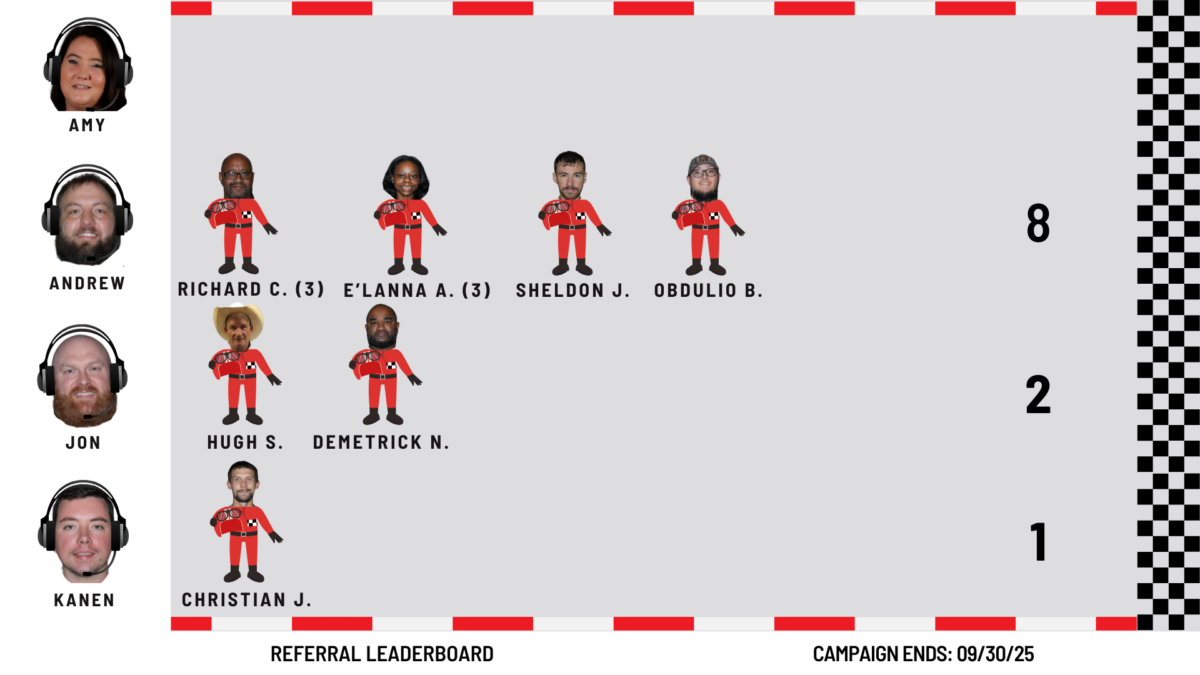
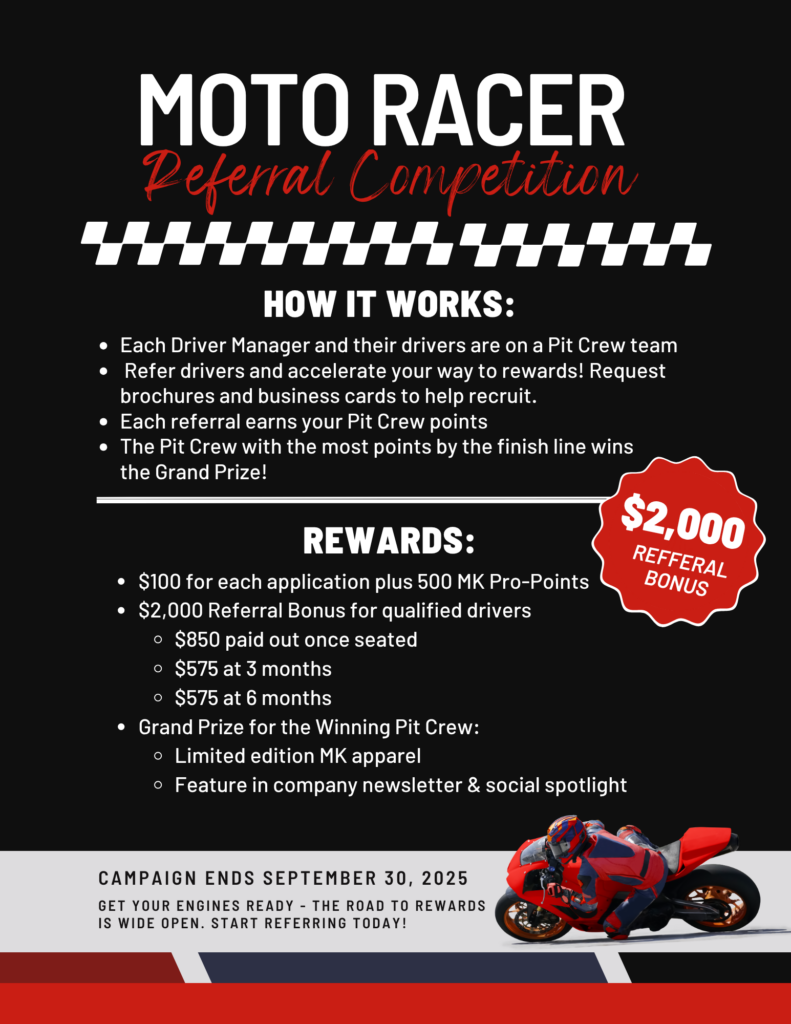
Thanks to the incredible participation in our last referral campaign, we saw great success, and we truly appreciate everyone who helped spread the word about MK!
Because of that success, we’re keeping the Referral Bonus Blitz at $2,000 (up from $1,000) for this campaign! You don’t want to miss out on this great opportunity again.
How It Works:
Each Driver Manager and their drivers are on a Pit Crew team
Refer drivers and accelerate your way to rewards! Request brochures and business cards to help recruit.
Each referral earns your Pit Crew points
The Pit Crew with the most points by the finish line wins the Grand Prize!